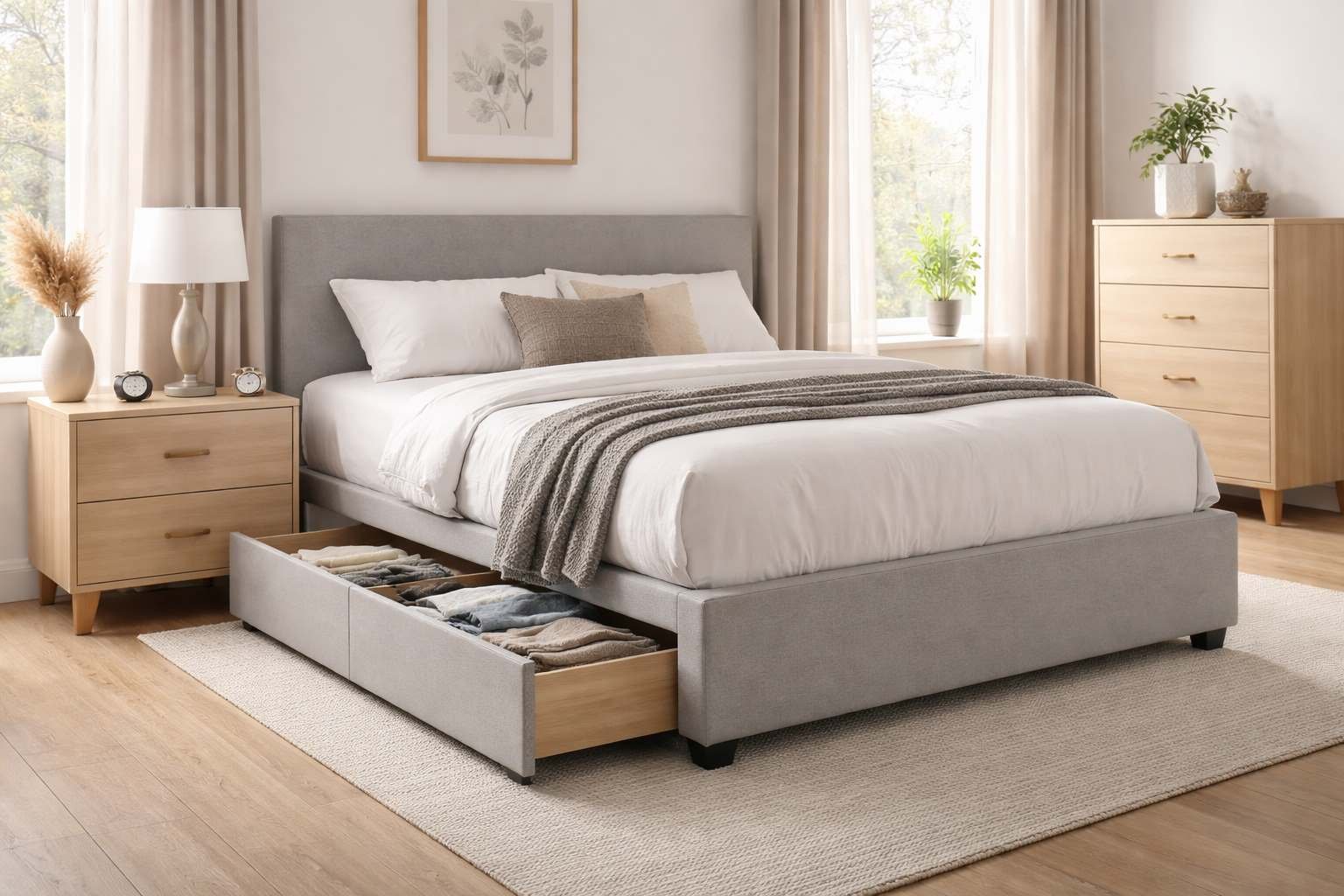
Storage beds are one of the most practical furniture choices for a small bedroom. By combining sleeping space with built-in storage, they reduce the need for additional dressers and free up valuable floor space.
If you’re planning a compact layout, this guide explains the different types of storage beds available and what to measure before choosing one.
For a complete overview of small bedroom planning, see our Small Bedroom Furniture Guide.
Why Storage Beds Work Well in Small Bedrooms
In smaller bedrooms, every item should serve more than one purpose. A storage bed can replace:
- A chest of drawers
- Under-bed plastic containers
- Extra shelving units
- Bulky standalone cabinets
Because storage is integrated into the frame, the room stays visually cleaner and easier to organise.
Types of Storage Beds
Not all storage beds function the same way. The right type depends on room layout, ceiling height, and clearance around the bed.
1. Drawer Storage Beds
These beds include built-in drawers along one or both sides of the frame.
Best for:
- Rooms with open side clearance
- Standard ceiling heights
- Easy daily access
Things to check:
- Drawer depth
- Full extension runners
- Clearance space needed to open drawers
2. Lift-Up (Ottoman) Storage Beds
These beds lift from the base to reveal a large storage compartment underneath the mattress.
Best for:
- Rooms with limited side clearance
- Storing bulkier items (bedding, seasonal clothing)
Things to check:
- Lift mechanism quality
- Ease of opening
- Mattress weight compatibility
- Ceiling height when raised
3. Captain’s Beds
Captain’s beds feature multiple drawers built into the sides and sometimes the foot of the bed.
Best for:
- Rooms replacing a full dresser
- Children’s or guest rooms
Things to check:
- Access on all sides
- Overall frame width
- Drawer build quality
What to Measure Before Buying
Before purchasing a storage bed, measure carefully:
- Total room length and width
- Distance from walls to doors
- Clearance needed for drawers or lift access
- Bed frame width (not just mattress size)
In smaller rooms, even a few extra inches of frame overhang can affect walking space.
Choosing the Right Size for a Small Room
The right bed size depends on both sleeping needs and available space.
- Twin / Single – Ideal for children’s rooms or very compact layouts
- Full / Double – Balanced option for smaller primary bedrooms
- Queen – Works in compact rooms with efficient layout planning
Always measure the full footprint of the frame, not just the mattress.
Storage Bed Materials and Build Quality
In smaller bedrooms, durability matters because the bed may replace other storage furniture.
Look for:
- Solid wood or reinforced engineered wood
- Smooth drawer runners
- Metal lift mechanisms with gas struts
- Sturdy slat systems
Avoid lightweight frames that flex under load, especially if storing heavier items.
When a Storage Bed May Not Be Ideal
Storage beds are not always the best solution.
They may not suit:
- Very narrow rooms with no drawer clearance
- Very low ceilings (for lift models)
- Layouts where the bed is placed tightly between walls
In these cases, under-bed rolling storage boxes or wall-mounted shelving may work better.
Related Small Bedroom Guides
For a complete small bedroom setup, see:
- Small Bedroom Furniture Guide
- Best Platform Beds for Small Bedrooms
- Best Narrow Nightstands
- Best Wardrobes for Small Bedrooms
Choosing the right storage bed can eliminate clutter and significantly improve the functionality of a small bedroom. Careful measurement and layout planning are essential to ensure the bed enhances the space rather than restricting it.